
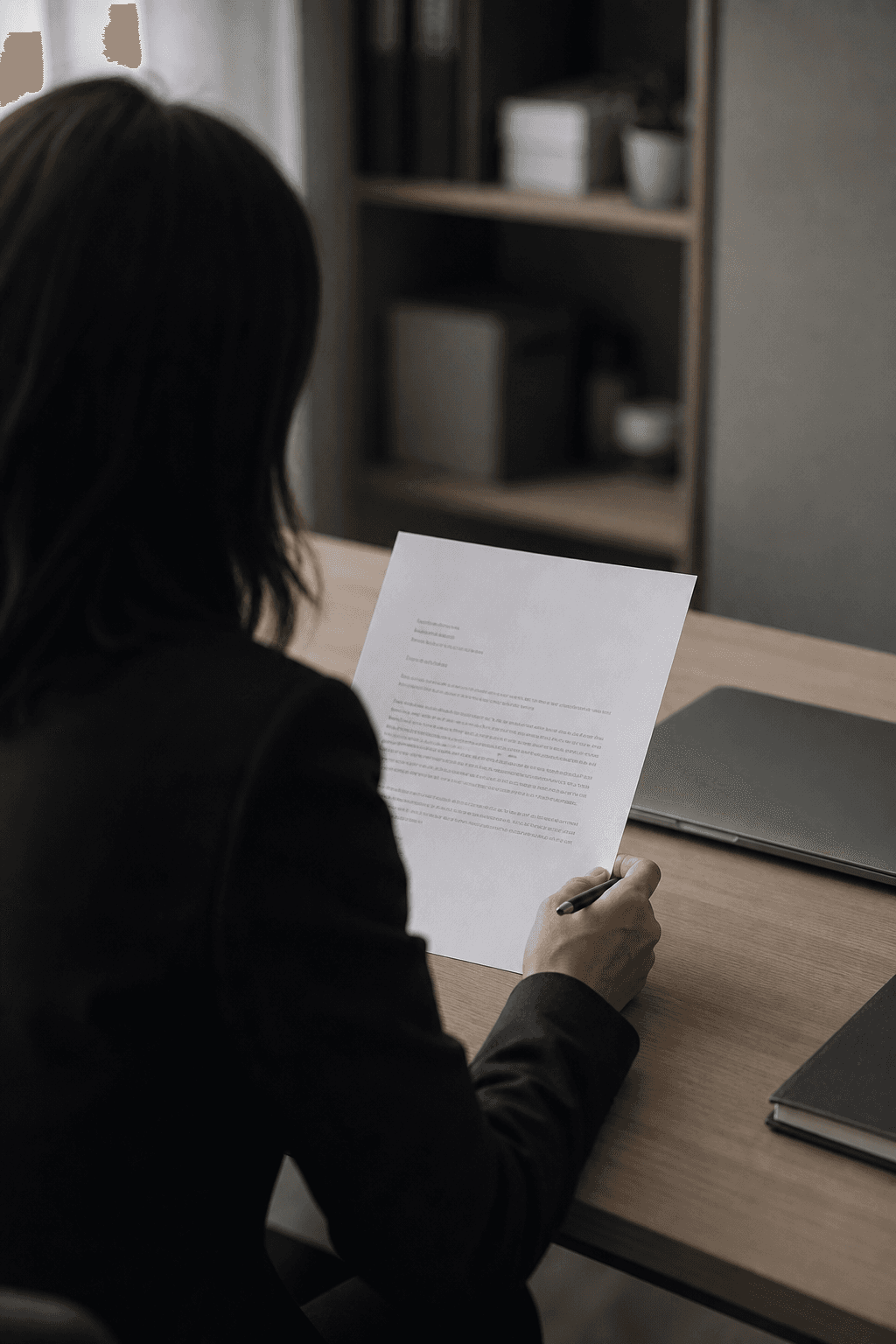
Everyone Is Using AI to Apply. What Should Hiring Managers Actually Do?
AI-written cover letters are now the norm, not the exception. Here is what a detector can and cannot tell you about an application, and how to use one without making a decision it cannot support.
Open a req today and the applications come in faster than they did three years ago. They also read a little better than they used to, with cleaner sentences and a cadence that feels oddly the same across people who have nothing else in common. Generative AI got very good at the cover letter fast, and honestly, that document was already formulaic before any of this started.
So hiring managers are stuck with an uncomfortable question. If someone used ChatGPT to write their application, does that tell you anything real about whether they can do the job?
For most roles, the honest answer is no
A cover letter is a low-signal document even when a person writes every word of it by hand. It follows a known shape and a known register, which is exactly why a model can fake one. Screen out everyone who used a tool to hit that bar and mostly what you've filtered for is who felt comfortable admitting they didn't.
A few roles work differently, though. Hire a writer, an editor, or a content marketer and the writing sample is the actual work sample, so how it got made is fair game. Tell candidates up front not to use AI and the question changes again too, because now you're checking whether they followed an instruction, not whether they can write.
Figure out which of those you're actually testing for before you run a scan. Don't let a score make that decision for you after the fact.
What a detector can honestly tell you
A detector reads patterns in text, things like flattened rhythm and stock phrasing, the kind of structure a little too predictable to be somebody typing at 11pm the night before a deadline. That's real signal, and a sentence-level report will show you exactly which passages carry it. One number for the whole document tells you almost nothing by comparison.
What it can't do is prove who wrote something. Ours doesn't return a verdict, not even close. It returns a likelihood, and the honest way to read a high score is "this reads like generated text," never "this person lied to me." That gap matters more here than it does almost anywhere else.
Where false positives hit hardest
Detection misfires in predictable ways, and hiring sits right in the blast radius of the worst ones.
Non-native English writers carry the sharpest risk. Someone who learned English through formal classroom instruction tends toward simpler grammar and more common word choices, which happens to be exactly the pattern detectors read as machine-generated. Stanford researchers ran real TOEFL essays through popular detectors and found that more than half came back wrongly flagged as AI.
Short documents are noisy on their own too. A three-paragraph cover letter sits close to the floor of what's even worth checking, so confidence should drop accordingly, not hold steady.
And heavily templated writing muddies things further. A candidate coached by a career center is following a formula on purpose. A model does the same thing by default, and telling the two apart from the text alone is mostly guessing.
Put those together and a pattern shows up. The people most likely to get flagged wrongly are disproportionately the ones with the least cushion to absorb an unfair rejection, which makes this a legal exposure and not just an awkward one, worth a conversation with your own legal or HR team before a score ever touches a hiring decision.
A more useful way to use the signal
Treat a flagged application as a reason to ask a sharper question, not as a reason to reject on the spot.
- Ask about the work itself. If a cover letter claims a result, have the candidate walk you through how they got it. Someone who actually did the work can go three levels deep on follow-up. A generated paragraph runs out of road fast.
- Ask for a longer writing sample. More text gives a detector something to actually reason about, and it gives you a better look at the role's real skill besides.
- Read the passages, skip the percentage. A report that marks specific sentences hands you something concrete to look at. An unexplained single number deserves less weight, not more.
- Don't let it be the only reason for a rejection. No detector out there, ours included, is built to carry that weight on its own, and any vendor who tells you otherwise is overselling their product pretty badly.
What this actually comes down to
AI-assisted applications are the baseline now, and no detector is putting that back in the box. What one is actually good for is pointing at where a document stopped sounding like a person, so you know where to start the conversation, which is genuinely useful on its own. It's also a lot smaller than "catching cheaters," which is how this whole category tends to get pitched.
Want to see it on a real application? The AI detector for hiring managers page runs a free check with no account needed. It marks the passages instead of just handing you a number, and it's worth reading why detectors flag genuinely human writing too, before you lean on one for anything that matters.