
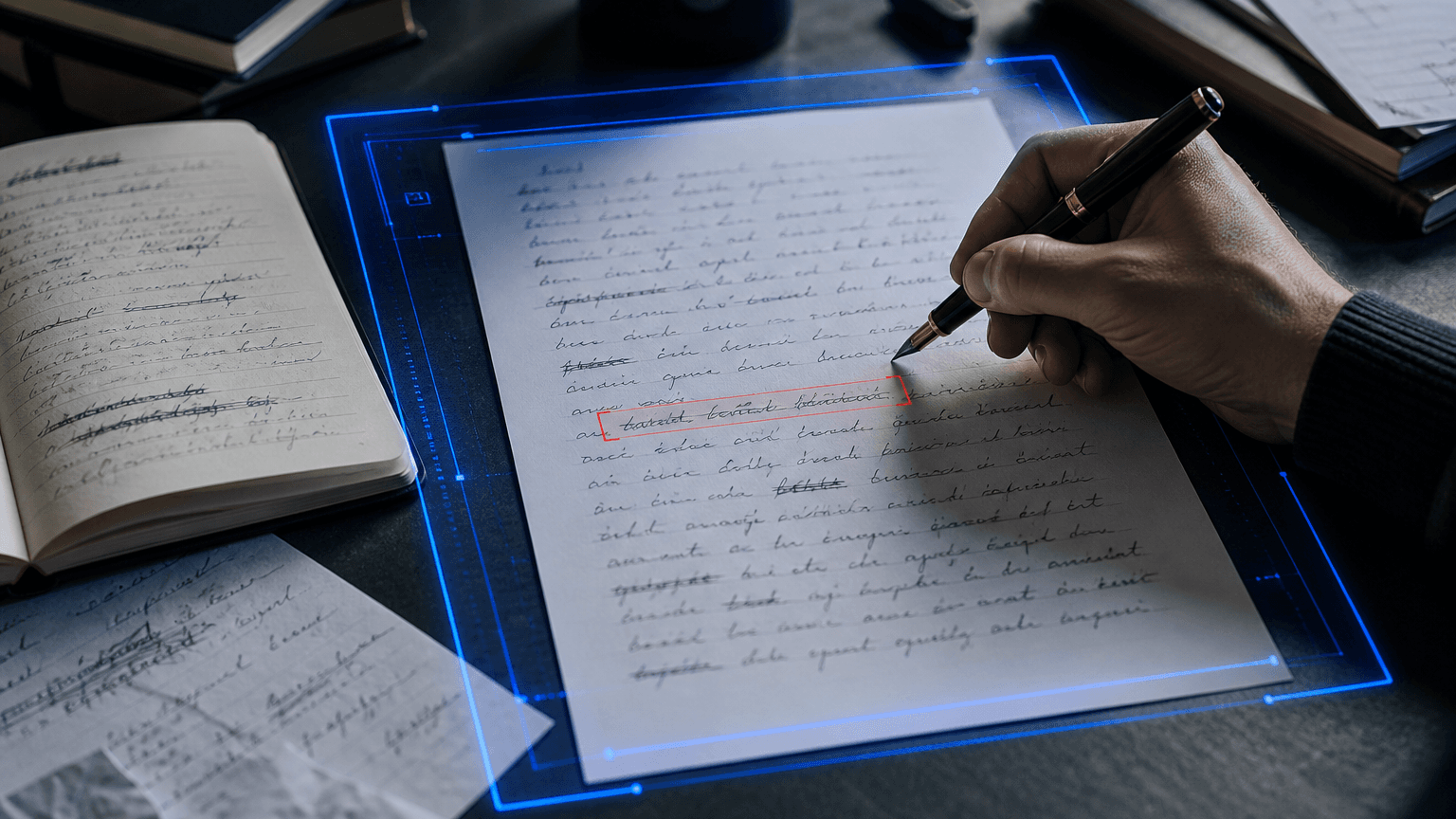
The False Positive Problem: Why AI Detectors Flag Real Human Writing
AI detectors have wrongly flagged real student and professional writing as machine-generated, and non-native English speakers get hit hardest. Here is what causes it and how to read a score responsibly.
A student turns in an essay she wrote herself and gets called into a meeting about academic dishonesty. A freelance writer submits a piece and the client refuses to pay because a scanner flagged it as machine-generated. A non-native English speaker polishes a cover letter, careful and correct, and a hiring tool quietly moves it to the bottom of the pile. None of these people used AI. All three were told they did.
That is the false positive problem, and it is the sharpest complaint anyone has leveled at AI detectors since the category existed. A detector that misses real AI writing is a missed catch, annoying but recoverable. A detector that flags a real person's writing makes an accusation, and some accusations carry consequences a corrected score can't undo.
What a false positive actually is
A false positive is a case where a detector scores genuinely human-written text as AI-generated. That's different from a detector being uncertain. Most detectors hand back one number, and a confident-looking number invites a confident conclusion even when the signal underneath it is thin. No statistical model gets this right every time. There is no such thing as a detector with zero errors. The actual failure comes after that. A wrong high score gets treated as proof, and in a classroom, a job application, or a client relationship, the person accused rarely gets a real chance to push back.
Why detectors get it wrong
AI detectors mostly work by measuring how predictable a piece of writing is. Language models pick likely next words. People are messier: we vary sentence length without meaning to, break grammar on purpose sometimes, and repeat ourselves in ways a model usually doesn't. Detectors are built to catch that gap. The problem is that plenty of human writing is predictable too, for reasons that have nothing to do with AI.
Take five-paragraph essays, legal boilerplate, technical documentation, standardized test responses. Years of schooling train people into exactly that shape, and the result is the same uniform, low-surprise sentence structure a detector is built to catch. Short text has the opposite problem. A two-sentence product description just doesn't hand a detector enough to work with, and every major detector, ours included, gets shakier under a few hundred words. Most say so, if you read the fine print instead of just the score.
The sharpest edge of the problem is second-language writing. Someone who learned English formally, as a second language, tends to write with simpler grammar and a narrower vocabulary than a native speaker dashing off a casual email. That's exactly the pattern a detector reads as machine-generated.
Two moments that made this a public fight
The false positive problem stopped being a niche complaint and became a public controversy through two events in 2023.
OpenAI shut down its own AI text classifier only six months after launching it, citing low accuracy. If the company that built ChatGPT couldn't build a reliable detector for its own model's output, that told everyone something about how hard the problem actually is.
Turnitin's rollout is the one people actually remember, though. It pushed its AI-writing indicator out to thousands of schools at once, scanning the work of millions of students by default, and instructors got a percentage next to each paper with often little explanation of how it was calculated. Students started reporting wrongful accusations right away. Some managed to prove their innocence. Some didn't, and mainstream outlets picked up the story throughout the year. An argument that used to live inside faculty meetings became front-page news.
What is actually at stake
A false positive is not just an inconvenience. A student can face a formal academic integrity hearing over an essay she wrote herself, and a job applicant can get filtered out before a human ever looks at the resume. A freelancer can lose a client relationship over it. In every case, the burden of proof lands on the accused, who ends up arguing against a tool that presented a guess as a fact.
How to read a score without turning it into a verdict
None of this means detection is useless. It means a score should open a conversation, not end one.
Start with the reasoning, not just the number. A good detector shows why a sentence was flagged, and an unexplained percentage deserves more suspicion, not less. Weight short and formulaic text less too. A two-paragraph email and a five-thousand-word report shouldn't earn the same confidence from an identical score. Think hard about who actually wrote it. A writer working in a second language, in a heavily templated format, or under a strict style guide can trigger a high score that's weaker evidence than it looks, and none of that shows up in the number itself. Above all, don't accuse on a score alone. Ask for drafts, revision history, or a real conversation about the work before treating a number as settled.
That's why every score on this site ships with the sentence it's attached to and the reason behind the flag, checked against our own detection model rather than handed down as a guess. No detector, ours included, is certain on every input. Treat the number as a lead worth chasing down, especially on a short draft, not a verdict already reached.